Je izdelek predrag? Nastavi opomnik za ceno in obvestimo te, ko pade!
LOKACIJE TRGOVIN
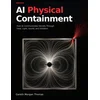
What if the smartest way to build a more capable robot is not to keep expanding the central processor-but to move the right computation closer to where it is actually nee...
Preberi cel opis
Ceneje.si ti olajša spletno nakupovanje ter pomaga pri izbiri najboljše ponudbe. Shopper's Mind Slovenija s podelitvijo oznake CERTIFIED SHOP® potrjuje, da je Premium trgovec vreden zaupanja in da je spletna trgovina skladna s standardi EU.
Cena z dostavo
33,84 €
Dobavljivost
Na zalogi. Dobavljivo v 9 - 13 dneh od dneva naročila.
Cena je bila osvežena danes ob 00:04.
V vsakem primeru na strani trgovine preverite ali je aktualna cena enaka navedeni na tej strani.
Ponudba trgovine Libristo.si za izdelek Coprocessor Design for Robotics. Pravilnost cene in podatkov preveri na spletni strani trgovine.
Parametri izdelka
Coprocessor Design for Robotics
Glavni parametri
Pomembna informacija
Ti podatki so zbrani z uradnih strani izdelkov. Preden nadaljujete do končnega nakupa, preverite podrobnosti. Če opazite težavo, jo lahko sporočite tukaj.
What if the smartest way to build a more capable robot is not to keep expanding the central processor-but to move the right computation closer to where it is actually needed?Coprocessor Design for Robotics explores twelve specialized hardware concepts for offloading sensing, control, supervision, safety, power management, and operator feedback from the main compute stack.The focus is not acceleration for its own sake. It is better system architecture: lower latency, more predictable timing, reduced data movement, improved fault isolation, and tighter integration between computation and the physical machine.Inside, you will explore how dedicated coprocessors can:Reduce latency in time-critical control pathsProcess raw sensor streams locally before they overload the hostImprove deterministic behaviour in real-time systemsReduce communication and memory bandwidth requirementsSeparate safety-critical supervision from the main autonomy stackSupport fault detection, graceful degradation, and resilient operationManage power and thermal limits across robotic subsystemsAccelerate structured computation such as sensor fusion and model-predictive controlThe twelve concepts span tactile sensing, event-camera preprocessing, vibration monitoring, compliant actuator control, intelligent end-effectors, legged locomotion, whole-body state estimation, event filtering, independent safety supervision, dynamic power allocation, swarm coordination, and haptic feedback.Throughout the book, each design is treated as a hardware-software partitioning problem. The central question is always whether specialization creates enough system-level advantage to justify the added hardware, verification, integration, and lifecycle complexity.For robotics engineers, embedded-system designers, FPGA and ASIC developers, control engineers, mechatronics specialists, and advanced students who want to understand where specialized hardware can genuinely improve robotic systems.The future of robotics will not depend only on how much computation a machine has.It will depend on whether the right computation is happening in the right place.