Je izdelek predrag? Nastavi opomnik za ceno in obvestimo te, ko pade!
LOKACIJE TRGOVIN
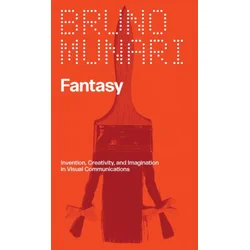
The first-ever English translation of Bruno Munari's classic treatise on creativity, replete with new contextualizing annotations "But isn't imagination also fantasy? And...
Preberi cel opis
Ceneje.si ti olajša spletno nakupovanje ter pomaga pri izbiri najboljše ponudbe. Shopper's Mind Slovenija s podelitvijo oznake CERTIFIED SHOP® potrjuje, da je Premium trgovec vreden zaupanja in da je spletna trgovina skladna s standardi EU.
Cena z dostavo
25,47 €
Dobavljivost
Na zalogi. Dobavljivo v 3 - 5 dneh od dneva naročila.
Cena je bila osvežena danes ob 00:09.
V vsakem primeru na strani trgovine preverite ali je aktualna cena enaka navedeni na tej strani.
Ponudba trgovine Libristo.si za izdelek Fantasy. Pravilnost cene in podatkov preveri na spletni strani trgovine.
Parametri izdelka
Fantasy
Glavni parametri
Pomembna informacija
Ti podatki so zbrani z uradnih strani izdelkov. Preden nadaljujete do končnega nakupa, preverite podrobnosti. Če opazite težavo, jo lahko sporočite tukaj.
The first-ever English translation of Bruno Munari's classic treatise on creativity, replete with new contextualizing annotations "But isn't imagination also fantasy? And can't fantastic images also assume the form of sounds? Musicians speak of sonic images, sound objects. How does one invent a fish tale, an air-cooled engine, a new plastic? ... fantasy, invention, creativity think; imagination sees."Never before translated into English, Bruno Munari's Fantasy, originally published in Italian in 1977, invites the reader to explore their own imagination, creativity and fantasy through a journey into Munari's mind and work. His theory of creativity, developed in conversation with the Reggio Emilia Approach (a self-guided approach to education) and the work of Jean Piaget (a Swiss developmental psychologist who proffered a theory termed "genetic epistemology") foregrounds the book's journey through Munari's design processes, both working for clients and teaching design principles to children. By turning both life and work into a classroom, Munari unlocks a path through imagination in order to access his, and in turn the reader's, deepest sense of play.The facsimile reprint is accompanied by new contextual annotations by Munari scholar and design historian Jeffrey Schnapp. These microinterventions highlight the innovations that make this work as relevant today as when originally published. Bruno Munari (1907-98) was an Italian artist, designer and inventor who contributed fundamentals to many fields of visual arts (painting, sculpture, film, industrial design, graphic design) in Modernism, Futurism and Concrete art, as well as to nonvisual arts (literature, poetry) through his research on games, didactic method, movement, tactile learning, kinesthetic learning and creativity.