Je izdelek predrag? Nastavi opomnik za ceno in obvestimo te, ko pade!
LOKACIJE TRGOVIN
The Inquiry of Ugra (Ugrapariprccha) is one of the most influential Mahayana sutras, preserved and transmitted in both India and China over many centuries and actively qu...
Preberi cel opis
Ceneje.si ti olajša spletno nakupovanje ter pomaga pri izbiri najboljše ponudbe. Shopper's Mind Slovenija s podelitvijo oznake CERTIFIED SHOP® potrjuje, da je Premium trgovec vreden zaupanja in da je spletna trgovina skladna s standardi EU.
Cena z dostavo
35,73 €
Dobavljivost
Na zalogi. Dobavljivo v 9 - 13 dneh od dneva naročila.
Cena je bila osvežena danes ob 00:03.
V vsakem primeru na strani trgovine preverite ali je aktualna cena enaka navedeni na tej strani.
Ponudba trgovine Libristo.si za izdelek Few Good Men. Pravilnost cene in podatkov preveri na spletni strani trgovine.
Parametri izdelka
Few Good Men
Glavni parametri
Pomembna informacija
Ti podatki so zbrani z uradnih strani izdelkov. Preden nadaljujete do končnega nakupa, preverite podrobnosti. Če opazite težavo, jo lahko sporočite tukaj.
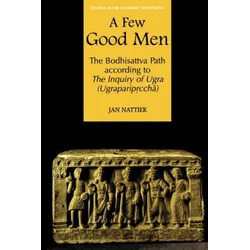
The Inquiry of Ugra (Ugrapariprccha) is one of the most influential Mahayana sutras, preserved and transmitted in both India and China over many centuries and actively quoted in treatises on the bodhisattva path. It is, nevertheless, one of the most neglected texts in Western treatments of Buddhism. The Ugra appears to be one of the earliest bodhisattva scriptures to come down to us, and as such it offers a particularly valuable window on the process by which the bodhisattva path came to be seen as a distinct vocational alternative within certain Indian Buddhist communities. A Few Good Men is a study and translation of the Ugra that will fundamentally alter previous perceptions of the way in which Mahayana was viewed and practiced by its earliest adherents. To achieve a better understanding of the universe of ideas, activities, and institutional structures within which early self-proclaimed bodhisattvas lived, the author first considers the Ugra as a literary document, employing new methodological tools to examine the genre to which it belongs, the age of its extant versions, and their relationships to one another. She goes on to challenge the dominant notions that the Mahayana emerged as a "reform" of earlier Buddhism and offered lay people an "easier option." On the contrary, the picture that emerges is of the early Mahayana as a more difficult and demanding vocation, initially limited to a small contingent of monastic males. Combining a detailed critical study and translation of an important Buddhist scripture with a sweeping reexamination of the relationship between the Buddha and the practitioner of early Mahayana, A Few Good Men will be compelling reading for scholars andpractitioners alike and others interested in the history of Indian Buddhism and the formation of Mahayana.